Kamis, 23 Juni 2011

[P484.Ebook] Download Ebook The Voice in the Machine: Building Computers That Understand Speech (MIT Press), by Roberto Pieraccini, Lawrence Rabiner

Download Ebook The Voice in the Machine: Building Computers That Understand Speech (MIT Press), by Roberto Pieraccini, Lawrence Rabiner

The method to get this book The Voice In The Machine: Building Computers That Understand Speech (MIT Press), By Roberto Pieraccini, Lawrence Rabiner is quite easy. You could not go for some locations and spend the moment to only find guide The Voice In The Machine: Building Computers That Understand Speech (MIT Press), By Roberto Pieraccini, Lawrence Rabiner As a matter of fact, you may not constantly get the book as you agree. Yet here, only by search and find The Voice In The Machine: Building Computers That Understand Speech (MIT Press), By Roberto Pieraccini, Lawrence Rabiner, you can obtain the listings of the books that you really anticipate. Often, there are many publications that are showed. Those publications naturally will surprise you as this The Voice In The Machine: Building Computers That Understand Speech (MIT Press), By Roberto Pieraccini, Lawrence Rabiner collection.

The Voice in the Machine: Building Computers That Understand Speech (MIT Press), by Roberto Pieraccini, Lawrence Rabiner

The Voice in the Machine: Building Computers That Understand Speech (MIT Press), by Roberto Pieraccini, Lawrence Rabiner


The Voice in the Machine: Building Computers That Understand Speech (MIT Press), by Roberto Pieraccini, Lawrence Rabiner

Download Ebook The Voice in the Machine: Building Computers That Understand Speech (MIT Press), by Roberto Pieraccini, Lawrence Rabiner

This is it guide The Voice In The Machine: Building Computers That Understand Speech (MIT Press), By Roberto Pieraccini, Lawrence Rabiner to be best seller recently. We offer you the most effective offer by getting the stunning book The Voice In The Machine: Building Computers That Understand Speech (MIT Press), By Roberto Pieraccini, Lawrence Rabiner in this web site. This The Voice In The Machine: Building Computers That Understand Speech (MIT Press), By Roberto Pieraccini, Lawrence Rabiner will certainly not just be the type of book that is hard to discover. In this website, all kinds of books are given. You could look title by title, writer by author, as well as publisher by author to learn the very best book The Voice In The Machine: Building Computers That Understand Speech (MIT Press), By Roberto Pieraccini, Lawrence Rabiner that you could review now.

Surely, to enhance your life top quality, every e-book The Voice In The Machine: Building Computers That Understand Speech (MIT Press), By Roberto Pieraccini, Lawrence Rabiner will certainly have their certain session. Nonetheless, having particular recognition will make you feel a lot more certain. When you really feel something happen to your life, sometimes, reading publication The Voice In The Machine: Building Computers That Understand Speech (MIT Press), By Roberto Pieraccini, Lawrence Rabiner can help you to make calmness. Is that your real hobby? Sometimes indeed, but in some cases will be uncertain. Your choice to read The Voice In The Machine: Building Computers That Understand Speech (MIT Press), By Roberto Pieraccini, Lawrence Rabiner as one of your reading e-books, could be your proper e-book to read now.

This is not about just how considerably this book The Voice In The Machine: Building Computers That Understand Speech (MIT Press), By Roberto Pieraccini, Lawrence Rabiner expenses; it is not likewise for exactly what sort of book you actually enjoy to review. It is about what you can take and receive from reviewing this The Voice In The Machine: Building Computers That Understand Speech (MIT Press), By Roberto Pieraccini, Lawrence Rabiner You could favor to pick other e-book; yet, it doesn't matter if you try to make this publication The Voice In The Machine: Building Computers That Understand Speech (MIT Press), By Roberto Pieraccini, Lawrence Rabiner as your reading choice. You will certainly not regret it. This soft data e-book The Voice In The Machine: Building Computers That Understand Speech (MIT Press), By Roberto Pieraccini, Lawrence Rabiner could be your excellent close friend all the same.

By downloading this soft file book The Voice In The Machine: Building Computers That Understand Speech (MIT Press), By Roberto Pieraccini, Lawrence Rabiner in the on-line link download, you remain in the primary step right to do. This site really provides you simplicity of exactly how to get the best publication, from ideal seller to the new launched book. You could find more publications in this website by visiting every link that we give. One of the collections, The Voice In The Machine: Building Computers That Understand Speech (MIT Press), By Roberto Pieraccini, Lawrence Rabiner is among the very best collections to offer. So, the first you obtain it, the first you will certainly get all good regarding this book The Voice In The Machine: Building Computers That Understand Speech (MIT Press), By Roberto Pieraccini, Lawrence Rabiner

The Voice in the Machine: Building Computers That Understand Speech (MIT Press), by Roberto Pieraccini, Lawrence Rabiner

Stanley Kubrick's 1968 film 2001: A Space Odyssey famously featured HAL, a computer with the ability to hold lengthy conversations with his fellow space travelers. More than forty years later, we have advanced computer technology that Kubrick never imagined, but we do not have computers that talk and understand speech as HAL did. Is it a failure of our technology that we have not gotten much further than an automated voice that tells us to "say or press 1"? Or is there something fundamental in human language and speech that we do not yet understand deeply enough to be able to replicate in a computer? In The Voice in the Machine, Roberto Pieraccini examines six decades of work in science and technology to develop computers that can interact with humans using speech and the industry that has arisen around the quest for these technologies. He shows that although the computers today that understand speech may not have HAL's capacity for conversation, they have capabilities that make them usable in many applications today and are on a fast track of improvement and innovation. Pieraccini describes the evolution of speech recognition and speech understanding processes from waveform methods to artificial intelligence approaches to statistical learning and modeling of human speech based on a rigorous mathematical model -- specifically, Hidden Markov Models (HMM). He details the development of dialog systems, the ability to produce speech, and the process of bringing talking machines to the market. Finally, he asks a question that only the future can answer: will we end up with HAL-like computers or something completely unexpected?

  • Sales Rank: #930010 in eBooks
  • Published on: 2012-03-23
  • Released on: 2012-03-23
  • Format: Kindle eBook

Review

With the explosive growth in speech applications on Android, iPhone and other devices, The Voice in the Machine is a timely read. It relates the 50+ year quest to develop voice recognition and synthesis, explains how the technologies work, and contains enough anecdotes to make it fun.

(Alfred Z. Spector, Vice President of Research, Google, Inc.)

There are many books on speech technology, but this is the first to explain the technology against a backdrop of the broader forces that have shaped the field. This will become a must-read text for those interested in what speech technology is and how it has developed.

(Robert Dale, Centre for Language Technology, Macquarie University)

Roberto Pieraccini's fascinating book takes us on a tour of human speech, modern techniques for speech understanding and generation, and the problems of deploying it in real industrial applications. By using examples, he conveys the essence of modern statistical speech processing without resorting to mathematics. This book is both entertaining and educational, and highly recommended.

(Steve Young, Professor of Information Engineering, University of Cambridge)

This is a fascinating tour of the development of modern speech technologies and applications…A wonderful historical account of the growth of speech technology.

(Choice)

About the Author

Roberto Pieraccini, Director of ICSI, the International Computer Science Institute in Berkeley, California, has been active for more than thirty years in speech research and technology.

Most helpful customer reviews

4 of 4 people found the following review helpful.
Phenomenal read!!
By Murray Spiegel
Roberto Pieraccini's The Voice in the Machine is a phenomenal read. I found myself enjoying every single page. The writing is clear, precise, personal, folksy, with entertaining anecdotes. As I got closer to the end of the book, I became sadder and sadder, realizing that the time when I would be entertained and educated by Roberto was drawing to a close.

Mostly about developments in the speech recognition field (for completeness, Pieraccini has one chapter on Text-to-Speech), it's a very well-written, comprehensive survey of the history and current developments in speech technology.

It covers everything from the earliest attempts, through all the government-sponsored ARPA speech recognition challenges, to recent commercial deployments. The book would well serve as a reference for a college course or just for leisure reading: it's the best example I've ever seen of a book that explains concepts behind complex math, intuitively, without using a single equation. Roberto's writing style could almost be called poetic. It definitely conveys the passion behind the science. You must get this!

3 of 3 people found the following review helpful.
Good Overview
By Samir Bajaj
Having just completed a course in NLP, I was looking for an introduction to speech processing in order to prep for more advanced reading on the subject. Pieraccini's book was just what I needed.

The author starts out by describing in convincing detail why human speech is so complex and difficult to understand, and to recreate in a lab or a commercial setting. He then goes on to describe early attempts inspired by AI, eventually arriving at statistical approaches that are the basis of most modern speech processing systems.

I like the book in its broad coverage, and while I do realize that the book is not aimed at techies, I'd have appreciated a little more coverage of HMMs and EM.

At a handful of places, there are some editing oversights that are simply disappointing for a book from a writer of this caliber (Ch. 5: "...De Mori, who pursued a brilliant carrier first at McGill..." -- career, not carrier).

Nonetheless, the book is a good read for someone interested in this technology.

1 of 1 people found the following review helpful.
Fantastic overview of the speech biz
By Jonathan Bloom
As someone who has been in the speech industry for quite some time, I can tell you this book is a terrific starting point for business people and students alike. Pierracini's great anecdotes are what makes this so enjoyable. Whether it's HAL 9000 or Victor Hugo he is employing to convey his point, the author makes learning enjoyable.

See all 7 customer reviews...

The Voice in the Machine: Building Computers That Understand Speech (MIT Press), by Roberto Pieraccini, Lawrence Rabiner PDF
The Voice in the Machine: Building Computers That Understand Speech (MIT Press), by Roberto Pieraccini, Lawrence Rabiner EPub
The Voice in the Machine: Building Computers That Understand Speech (MIT Press), by Roberto Pieraccini, Lawrence Rabiner Doc
The Voice in the Machine: Building Computers That Understand Speech (MIT Press), by Roberto Pieraccini, Lawrence Rabiner iBooks
The Voice in the Machine: Building Computers That Understand Speech (MIT Press), by Roberto Pieraccini, Lawrence Rabiner rtf
The Voice in the Machine: Building Computers That Understand Speech (MIT Press), by Roberto Pieraccini, Lawrence Rabiner Mobipocket
The Voice in the Machine: Building Computers That Understand Speech (MIT Press), by Roberto Pieraccini, Lawrence Rabiner Kindle

The Voice in the Machine: Building Computers That Understand Speech (MIT Press), by Roberto Pieraccini, Lawrence Rabiner PDF

The Voice in the Machine: Building Computers That Understand Speech (MIT Press), by Roberto Pieraccini, Lawrence Rabiner PDF

The Voice in the Machine: Building Computers That Understand Speech (MIT Press), by Roberto Pieraccini, Lawrence Rabiner PDF

Selasa, 21 Juni 2011

[X406.Ebook] Download Ebook Essential Principles of Image Sensors, by Takao Kuroda

Download Ebook Essential Principles of Image Sensors, by Takao Kuroda

Why must select the problem one if there is very easy? Obtain the profit by buying guide Essential Principles Of Image Sensors, By Takao Kuroda below. You will get various method making an offer and get the book Essential Principles Of Image Sensors, By Takao Kuroda As known, nowadays. Soft file of guides Essential Principles Of Image Sensors, By Takao Kuroda become incredibly popular among the readers. Are you one of them? As well as below, we are providing you the extra collection of ours, the Essential Principles Of Image Sensors, By Takao Kuroda.

Essential Principles of Image Sensors, by Takao Kuroda

Essential Principles of Image Sensors, by Takao Kuroda


Essential Principles of Image Sensors, by Takao Kuroda

Download Ebook Essential Principles of Image Sensors, by Takao Kuroda

Why must pick the inconvenience one if there is very easy? Get the profit by getting guide Essential Principles Of Image Sensors, By Takao Kuroda below. You will obtain different method to make a bargain and obtain the book Essential Principles Of Image Sensors, By Takao Kuroda As recognized, nowadays. Soft documents of guides Essential Principles Of Image Sensors, By Takao Kuroda end up being incredibly popular with the users. Are you among them? And also here, we are offering you the brand-new compilation of ours, the Essential Principles Of Image Sensors, By Takao Kuroda.

This publication Essential Principles Of Image Sensors, By Takao Kuroda deals you better of life that could create the quality of the life better. This Essential Principles Of Image Sensors, By Takao Kuroda is just what the people now need. You are below as well as you might be exact and also sure to get this book Essential Principles Of Image Sensors, By Takao Kuroda Never question to get it also this is merely a book. You can get this book Essential Principles Of Image Sensors, By Takao Kuroda as one of your compilations. However, not the compilation to show in your bookshelves. This is a priceless book to be reviewing compilation.

Just how is making sure that this Essential Principles Of Image Sensors, By Takao Kuroda will not displayed in your shelfs? This is a soft file book Essential Principles Of Image Sensors, By Takao Kuroda, so you could download Essential Principles Of Image Sensors, By Takao Kuroda by buying to get the soft data. It will relieve you to read it each time you need. When you feel lazy to relocate the printed book from the home of workplace to some place, this soft file will certainly ease you not to do that. Considering that you could only save the data in your computer hardware and gizmo. So, it allows you review it almost everywhere you have readiness to check out Essential Principles Of Image Sensors, By Takao Kuroda

Well, when else will certainly you find this possibility to get this publication Essential Principles Of Image Sensors, By Takao Kuroda soft data? This is your good opportunity to be right here as well as get this wonderful book Essential Principles Of Image Sensors, By Takao Kuroda Never leave this publication prior to downloading this soft file of Essential Principles Of Image Sensors, By Takao Kuroda in web link that we give. Essential Principles Of Image Sensors, By Takao Kuroda will really make a great deal to be your best friend in your lonely. It will be the very best partner to enhance your operation as well as hobby.

Essential Principles of Image Sensors, by Takao Kuroda

Providing a succinct introduction to the systemization, noise sources, and signal processes of image sensor technology, Essential Principles of Image Sensors discusses image information and its four factors: space, light intensity, wavelength, and time. Featuring clarifying and insightful illustrations, this must-have text:

  • Explains how image sensors convert optical image information into image signals
  • Treats space, wavelength, and time as digitized built-in coordinate points in image sensors and systems
  • Details the operational principles, pixel technology, and evolution of CCD, MOS, and CMOS sensors with updated technology
  • Describes sampling theory, presenting unique figures demonstrating the importance of phase
  • Explores causes for the decline of image information quality

In a straightforward manner suitable for beginners and experts alike, Essential Principles of Image Sensors covers key topics related to digital imaging including semiconductor physics, component elements necessary for image sensors, silicon as a sensitive material, noises in sensors, and more.

  • Sales Rank: #2068330 in Books
  • Published on: 2014-08-12
  • Original language: English
  • Number of items: 1
  • Dimensions: 11.10" h x .60" w x 7.20" l, .0 pounds
  • Binding: Hardcover
  • 192 pages

Most helpful customer reviews

1 of 1 people found the following review helpful.
Nice content, disaster english.
By AM
I have a lot of respect for the technical competences of the author, and the content of the book is highly interesting, but unfortunately the english language used by the Japanese author makes this book a disaster. The author does not master the english language well enough and the editor (and I complain especially about this!) has made no effort whatsoever to decently translate the Japanese language any better than what an automatic computerized translator does. Technical explanations that can be understood through colloquial english at a conference or oral presentation are a real pain to read in a book.
If you want to convince yourselves, browse the few pages available here on preview.

0 of 0 people found the following review helpful.
This book is highly recommended to engineers
By luke
This book covers the basic principles of image sensors from basic semiconductor device to sensor physics to image processing fundamentals. It is a pleasure to read as each new concept is well motivated and presented in an intuitively clear manner. The book is written in the elegant style of a mature scientist, giving essential details and being generous with insights and hints, yet not being overloaded with details. This book is highly recommended to engineers, applied physicists. Although it is written in a technical style, it will serve well for graduate students.

See all 2 customer reviews...

Essential Principles of Image Sensors, by Takao Kuroda PDF
Essential Principles of Image Sensors, by Takao Kuroda EPub
Essential Principles of Image Sensors, by Takao Kuroda Doc
Essential Principles of Image Sensors, by Takao Kuroda iBooks
Essential Principles of Image Sensors, by Takao Kuroda rtf
Essential Principles of Image Sensors, by Takao Kuroda Mobipocket
Essential Principles of Image Sensors, by Takao Kuroda Kindle

Essential Principles of Image Sensors, by Takao Kuroda PDF

Essential Principles of Image Sensors, by Takao Kuroda PDF

Essential Principles of Image Sensors, by Takao Kuroda PDF

Sabtu, 11 Juni 2011

[P307.Ebook] Ebook The End of Negotiable Instruments: Bringing Payment Systems Law Out of the Past 1st edition

Ebook The End of Negotiable Instruments: Bringing Payment Systems Law Out of the Past 1st edition

It is quite easy to read guide The End Of Negotiable Instruments: Bringing Payment Systems Law Out Of The Past 1st Edition in soft file in your gizmo or computer system. Once again, why ought to be so challenging to obtain the book The End Of Negotiable Instruments: Bringing Payment Systems Law Out Of The Past 1st Edition if you can choose the less complicated one? This web site will ease you to select as well as select the most effective collective books from one of the most ideal vendor to the launched book recently. It will certainly consistently update the compilations time to time. So, attach to internet and also visit this site constantly to obtain the new publication on a daily basis. Currently, this The End Of Negotiable Instruments: Bringing Payment Systems Law Out Of The Past 1st Edition is your own.

The End of Negotiable Instruments: Bringing Payment Systems Law Out of the Past 1st edition

The End of Negotiable Instruments: Bringing Payment Systems Law Out of the Past 1st edition


The End of Negotiable Instruments: Bringing Payment Systems Law Out of the Past 1st edition

Ebook The End of Negotiable Instruments: Bringing Payment Systems Law Out of the Past 1st edition

The End Of Negotiable Instruments: Bringing Payment Systems Law Out Of The Past 1st Edition. Checking out makes you much better. Which states? Many wise words say that by reading, your life will certainly be a lot better. Do you believe it? Yeah, confirm it. If you need the book The End Of Negotiable Instruments: Bringing Payment Systems Law Out Of The Past 1st Edition to review to prove the sensible words, you can visit this web page flawlessly. This is the site that will certainly provide all guides that possibly you require. Are the book's collections that will make you feel interested to check out? Among them here is the The End Of Negotiable Instruments: Bringing Payment Systems Law Out Of The Past 1st Edition that we will suggest.

Reading The End Of Negotiable Instruments: Bringing Payment Systems Law Out Of The Past 1st Edition is an extremely useful passion and also doing that could be undergone at any time. It means that checking out a publication will certainly not limit your activity, will not compel the time to spend over, and also will not invest much cash. It is a really budget friendly and reachable thing to buy The End Of Negotiable Instruments: Bringing Payment Systems Law Out Of The Past 1st Edition Yet, with that quite cheap point, you could obtain something new, The End Of Negotiable Instruments: Bringing Payment Systems Law Out Of The Past 1st Edition something that you never do and also get in your life.

A new experience can be acquired by reviewing a book The End Of Negotiable Instruments: Bringing Payment Systems Law Out Of The Past 1st Edition Even that is this The End Of Negotiable Instruments: Bringing Payment Systems Law Out Of The Past 1st Edition or other book collections. We provide this publication considering that you could discover a lot more points to urge your ability and understanding that will certainly make you much better in your life. It will certainly be likewise helpful for the people around you. We suggest this soft data of guide right here. To recognize ways to obtain this book The End Of Negotiable Instruments: Bringing Payment Systems Law Out Of The Past 1st Edition, learn more right here.

You can locate the web link that we offer in website to download The End Of Negotiable Instruments: Bringing Payment Systems Law Out Of The Past 1st Edition By acquiring the economical price and get completed downloading, you have completed to the first stage to get this The End Of Negotiable Instruments: Bringing Payment Systems Law Out Of The Past 1st Edition It will certainly be nothing when having actually acquired this publication and also not do anything. Review it and also reveal it! Invest your couple of time to just review some sheets of web page of this publication The End Of Negotiable Instruments: Bringing Payment Systems Law Out Of The Past 1st Edition to review. It is soft data and very easy to check out anywhere you are. Appreciate your brand-new behavior.

The End of Negotiable Instruments: Bringing Payment Systems Law Out of the Past 1st edition

  • Published on: 1709
  • Binding: Hardcover

Most helpful customer reviews

See all customer reviews...

The End of Negotiable Instruments: Bringing Payment Systems Law Out of the Past 1st edition PDF
The End of Negotiable Instruments: Bringing Payment Systems Law Out of the Past 1st edition EPub
The End of Negotiable Instruments: Bringing Payment Systems Law Out of the Past 1st edition Doc
The End of Negotiable Instruments: Bringing Payment Systems Law Out of the Past 1st edition iBooks
The End of Negotiable Instruments: Bringing Payment Systems Law Out of the Past 1st edition rtf
The End of Negotiable Instruments: Bringing Payment Systems Law Out of the Past 1st edition Mobipocket
The End of Negotiable Instruments: Bringing Payment Systems Law Out of the Past 1st edition Kindle

The End of Negotiable Instruments: Bringing Payment Systems Law Out of the Past 1st edition PDF

The End of Negotiable Instruments: Bringing Payment Systems Law Out of the Past 1st edition PDF

The End of Negotiable Instruments: Bringing Payment Systems Law Out of the Past 1st edition PDF

Senin, 30 Mei 2011

[L326.Ebook] Ebook Download Trump Revealed: An American Journey of Ambition, Ego, Money, and Power, by Michael Kranish, Marc Fisher

Ebook Download Trump Revealed: An American Journey of Ambition, Ego, Money, and Power, by Michael Kranish, Marc Fisher

Never doubt with our deal, due to the fact that we will consistently give exactly what you require. As similar to this upgraded book Trump Revealed: An American Journey Of Ambition, Ego, Money, And Power, By Michael Kranish, Marc Fisher, you could not find in the various other location. Yet right here, it's extremely easy. Just click as well as download, you can own the Trump Revealed: An American Journey Of Ambition, Ego, Money, And Power, By Michael Kranish, Marc Fisher When convenience will alleviate your life, why should take the complicated one? You can purchase the soft documents of guide Trump Revealed: An American Journey Of Ambition, Ego, Money, And Power, By Michael Kranish, Marc Fisher right here as well as be member people. Besides this book Trump Revealed: An American Journey Of Ambition, Ego, Money, And Power, By Michael Kranish, Marc Fisher, you could additionally find hundreds listings of the books from lots of sources, compilations, authors, and also authors in worldwide.
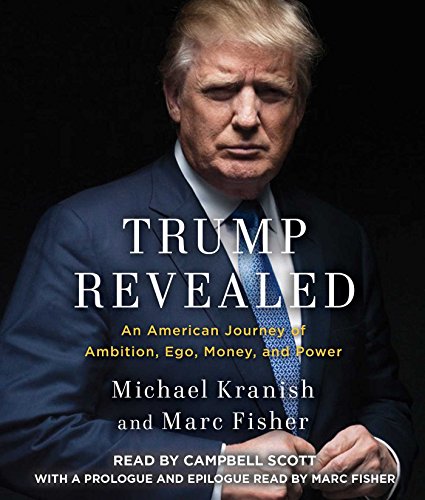
Trump Revealed: An American Journey of Ambition, Ego, Money, and Power, by Michael Kranish, Marc Fisher

Trump Revealed: An American Journey of Ambition, Ego, Money, and Power, by Michael Kranish, Marc Fisher


Trump Revealed: An American Journey of Ambition, Ego, Money, and Power, by Michael Kranish, Marc Fisher

Ebook Download Trump Revealed: An American Journey of Ambition, Ego, Money, and Power, by Michael Kranish, Marc Fisher

Is Trump Revealed: An American Journey Of Ambition, Ego, Money, And Power, By Michael Kranish, Marc Fisher book your preferred reading? Is fictions? Exactly how's about history? Or is the very best vendor novel your choice to satisfy your downtime? And even the politic or religious publications are you looking for now? Right here we go we offer Trump Revealed: An American Journey Of Ambition, Ego, Money, And Power, By Michael Kranish, Marc Fisher book collections that you need. Bunches of numbers of publications from numerous fields are given. From fictions to science and religious can be browsed as well as learnt right here. You might not stress not to discover your referred book to read. This Trump Revealed: An American Journey Of Ambition, Ego, Money, And Power, By Michael Kranish, Marc Fisher is among them.

Checking out publication Trump Revealed: An American Journey Of Ambition, Ego, Money, And Power, By Michael Kranish, Marc Fisher, nowadays, will certainly not require you to consistently acquire in the establishment off-line. There is a great location to acquire the book Trump Revealed: An American Journey Of Ambition, Ego, Money, And Power, By Michael Kranish, Marc Fisher by online. This website is the very best site with great deals varieties of book collections. As this Trump Revealed: An American Journey Of Ambition, Ego, Money, And Power, By Michael Kranish, Marc Fisher will certainly remain in this book, all books that you need will certainly correct below, also. Just search for the name or title of guide Trump Revealed: An American Journey Of Ambition, Ego, Money, And Power, By Michael Kranish, Marc Fisher You can discover what exactly you are searching for.

So, also you need responsibility from the business, you might not be puzzled more considering that books Trump Revealed: An American Journey Of Ambition, Ego, Money, And Power, By Michael Kranish, Marc Fisher will certainly always aid you. If this Trump Revealed: An American Journey Of Ambition, Ego, Money, And Power, By Michael Kranish, Marc Fisher is your best companion today to cover your task or job, you can as quickly as feasible get this publication. Exactly how? As we have informed formerly, simply go to the web link that we offer below. The conclusion is not just guide Trump Revealed: An American Journey Of Ambition, Ego, Money, And Power, By Michael Kranish, Marc Fisher that you search for; it is just how you will get several books to support your skill and also ability to have piece de resistance.

We will show you the best and easiest method to get book Trump Revealed: An American Journey Of Ambition, Ego, Money, And Power, By Michael Kranish, Marc Fisher in this globe. Bunches of compilations that will certainly support your task will certainly be right here. It will make you feel so ideal to be part of this website. Ending up being the member to consistently see just what up-to-date from this publication Trump Revealed: An American Journey Of Ambition, Ego, Money, And Power, By Michael Kranish, Marc Fisher site will make you feel ideal to hunt for guides. So, recently, as well as here, get this Trump Revealed: An American Journey Of Ambition, Ego, Money, And Power, By Michael Kranish, Marc Fisher to download and install and also wait for your valuable worthwhile.

Trump Revealed: An American Journey of Ambition, Ego, Money, and Power, by Michael Kranish, Marc Fisher

A comprehensive biography of Donald Trump, the Republican front-runner in the presidential election campaign. Trump Revealed will be reported by a team of award-winning Washington Post journalists and co-authored by investigative political reporter Michael Kranish and senior editor Marc Fisher.

Trump Revealed will offer the most thorough and wide-ranging examination of Donald Trump’s public and private lives to date, from his upbringing in Queens and formative years at the New York Military Academy, to his turbulent careers in real estate and entertainment, to his astonishing rise as the front-runner for the Republican presidential nomination. The book will be based on the investigative reporting of more than two dozen Post reporters and researchers who will leverage their expertise in politics, business, legal affairs, sports, and other areas. The effort will be guided by a team of editors headed by Executive Editor Martin Baron, who joined the newspaper in 2013 after his successful tenure running The Boston Globe, which included the “Spotlight” team’s investigation of sexual abuse in the Catholic Church.

  • Sales Rank: #753135 in Books
  • Published on: 2016-08-23
  • Released on: 2016-08-23
  • Formats: Audiobook, CD, Unabridged
  • Original language: English
  • Number of items: 12
  • Dimensions: 5.87" h x 1.20" w x 5.00" l,
  • Running time: 51259 seconds
  • Binding: Audio CD

Review
"Any voter who is not already devoted to Trump's cause will find plenty of reason to think long and hard about whether to support him�after reading this book. ...Talented writers�Michael Kranish�and Marc Fisher have taken the�work of dozens of�Post�journalists and woven it into a compelling narrative.�...The best of investigative reporting is brought to bear on a man who could potentially lead the free world. They paint a sobering portrait that merits inspection. Voters can't say they weren't warned."
—USA Today

"The most definitive book about Trump to date."
—Booklist

"The many revealing scenes cohere into a fascinating portrait. ...Trump the outrageous poseur becomes sadder and more real in this fine book."
—Evan Thomas,�The Washington Post

"[L]ikely�the most complete and nuanced life of Trump thus far."
—Boston Globe

“Those willing and brave enough to dare these pages will find the authors’ approach evenhanded, perhaps even overly so, in preference to allowing Trump plenty of rope—and suffice it to say that Trump unrolls miles of it.”
—Kirkus Reviews

"Useful, vigorously reported...deftly charts [Trump's] single-minded building of his gaudy brand and his often masterful manipulation of the media."
—The New York Times

“I know, I know — you’ve likely read more than you ever wanted to about the star of his own life. You have had it up to here and probably think you know all there is to know about the destroyer of the Republican Party….Although I have fussed, fumed and fulminated, I see that I have, frankly, not understood all there is understand about Mr. Trump….I guarantee that reading about this particular life is incredible. It has taken genuine intelligent research to realize it. Page after page, it’s all convincing. I think you’ll be startled by the cumulate facts….I wish I had read it before, but I simply didn’t know the half of it.”
—Liz Smith, New York Social Diary

“347 well-reported pages.”
—VICE

“As we look ahead to a Trump administration that appears particularly disinclined toward transparency, this book is all the more valuable in understanding how Trump, our president-elect, has behaved in the past as a manager, businessman and private person.”
—Los Angeles Times

“Based on that paper’s superb reporting on the Trump era so far, I bet there is some useful information in�this deep dig into Trump’s�life and his business record.”
—The Seattle Times

“Benefits greatly from the in-depth reporting so critical to Jeffersonian democracy in the day of the tweet, the blog and the self-congratulatory mockery of ‘fair and balanced’ journalism.”
—The Roanoke Times

About the Author
Michael Kranish is an investigative political reporter for The Washington Post. He is the coauthor of John F. Kerry and The Real Romney, both Boston Globe biographies of the presidential candidates, and the author of Flight from Monticello: Thomas Jefferson at War. He was the recipient of the Society of Professional Journalists Award for Washington Correspondence in 2016. Visit MichaelKranish.com.

Marc Fisher is a senior editor at The Washington Post, where he has been the enterprise editor, local columnist, and Berlin bureau chief, among other positions over thirty years at the paper. He is the author of Something in the Air, a history of radio, and After the Wall, an account of the fall of the Berlin Wall and the reunification of Germany. Fisher wrote several of the Washington Post articles that won the Pulitzer Prize for National Reporting in 2016 and the Pulitzer Prize for Public Service in 2014. Visit MarcFisher.com.

Campbell Scott directed the film Off The Map, and received the best actor award from the National Board of Review for his performance in Roger Dodger. His other films include The Secret Lives of Dentists, The Dying Gaul, Mrs. Parker and the Vicious Circle and Big Night, which he also co-directed.

Marc Fisher is a senior editor at The Washington Post, where he has been the enterprise editor, local columnist, and Berlin bureau chief, among other positions over thirty years at the paper. He is the author of Something in the Air, a history of radio, and After the Wall, an account of the fall of the Berlin Wall and the reunification of Germany. Fisher wrote several of the Washington Post articles that won the Pulitzer Prize for National Reporting in 2016 and the Pulitzer Prize for Public Service in 2014. Visit MarcFisher.com.

Excerpt. � Reprinted by permission. All rights reserved.
Trump Revealed 1 Gold Rush: The New Land
On a June day in 2008 by the northwest coast of Scotland, a cluster of townsfolk in the Outer Hebrides gazed skyward at an approaching airplane. The islands on which they lived were shaped like a medieval club, narrow at the southern end, thick at the north, splayed amid choppy gray-blue waters. Much of the lightly populated land appeared from afar to be an endless greensward, fields reaching to ragged cliffs and rocky beaches, beyond which lay a string of islets. The islanders waited as the Boeing 727 banked toward them.

The jet was an unusual visitor, nothing like the propeller-powered puddle jumpers or rattling Royal Mail craft that frequented the island. Having traversed the Atlantic Ocean on its voyage from Boston, the craft cut through the winds, bounced its wheels on the tarmac, and taxied toward the small terminal in Stornoway, population eight thousand, the main city on the Isle of Lewis. The plane had been retrofitted to the exacting specifications of its owner, Donald J. Trump, of Manhattan. It had a master bedroom, spacious seating for twenty-four passengers, a dining area for five guests with accompanying china and crystal serving, and, for good measure, two gold-plated sinks. A single word in capital letters, TRUMP, streaked across the fuselage. As the plane’s engines shut down, Trump’s underlings unloaded cases of his books, which would be given like totems to the islanders. One case was labeled TRUMP: HOW TO GET RICH and another NEVER GIVE UP.

Trump, dressed in a dark suit, white shirt, and blue tie that hung well below his belt, his thatch of blondish hair flapping in the breeze, greeted the islanders. Then he and his fellow travelers headed to a black Porsche Cayenne and two BMW X5s. The entourage drove along winding roads for seven miles, past green hills rolling down to a bay, through neighborhoods of waterfront homes and small industrial buildings, until they arrived at a gray house known as 5 Tong, named for the village in which it was located. Trump exited his car and peeked inside. The dwelling was so modest that Trump remained inside for only ninety-seven seconds. Photos were taken, and the story line seemed neatly complete: Trump visits the birthplace of his mother, Mary Anne MacLeod.

“I feel very comfortable here,” Trump told the gathered reporters. “When your mother comes from a certain location, you tend to like that location. I do feel Scottish, but don’t ask me to define that. There was something very strong from my mother.” In case anyone had failed to notice, Trump added, “I have a lot of money.”

Trump had been here only once before, when he was three or four years old, and this stay seemed as brief as possible, barely three hours. There was talk of Trump’s turning a local castle into a luxury hotel. Then it was off to another part of Scotland, where Trump hoped this rare reminder of his heritage might help persuade politicians to let him build a massive golf resort and housing development on environmentally sensitive land near Aberdeen.

Trump’s mother’s story was a classic one of desire for a new life in a strange land, freighted with a seemingly unrealistic dream of unimaginable riches. The wealth, in the case of Trump’s family, would one day come. But that result could hardly have been envisioned if one could step back in time to a scene captured in a grainy photograph taken near the very spot that Trump visited so briefly on that June day.

��•��•��•��

THE BLACK-AND-WHITE PHOTO WAS taken in 1930 at 5 Tong. A woman is slightly hunched over, wearing a full-length dress, her hair tied back, a strap around her shoulder. The strap is attached to a bundle on her back that is about ten times the size of her head. She is, according to the caption written by the Tong historical society, a Trump ancestor, possibly Donald’s grandmother, “carrying a creel of seaweed on her back.” In the background is a young lady, perhaps Trump’s mother, Mary MacLeod, then eighteen years old, and already planning to leave her increasingly destitute island and find her way to America.

Mary grew up in this remote place speaking the local Gaelic dialect. Tong had been home to Mary’s parents, grandparents, and great-grandparents, as well as countless cousins. The land around the home was known as a croft, a small farm typically worked by the mother, enabling the father to spend much of his time fishing. It was a spare existence, with many properties “indescribably filthy, with doors so low it is necessary to crawl in and out,” according to a local history. Families struggled to cobble together incomes through a combination of farming in the acidic soil and raising animals, fishing in the nearby bay and rivers, and collecting peat to be sold or used as fuel and seaweed to be used as fertilizer on the difficult land. It was all too common for men to sink with their sailing ships, a fate that in 1868 befell Mary’s thirty-four-year-old grandfather, Donald Smith, who had the same first name Mary gave decades later to her son, Donald Trump.

Mary was born in 1912 during the height of a boom in herring, the fatty fish that had become a delicacy throughout Europe. Many young residents worked the trade, gutting the fish or traveling with the fleets. Mary was a child during World War I, when the island’s fishing industry collapsed. Ten percent of the male population died. A wave of emigration took place as families searched for economic opportunity elsewhere. One Tong man was said to have done so well that when he returned for a visit, he arrived in a big American car with white tires and gave local children a ride.

Then, in 1918, one of the greatest businessmen of the era, Lord Leverhulme, known for his family’s Lever soap empire, paid 143,000 pounds to purchase the Isle of Lewis, on which Tong was located. He moved into the sprawling Lews Castle and announced a series of grand schemes, including the marketing of local fish at hundreds of retail shops across the United Kingdom. Most of all, he urged residents to trust him.

Amid this brief period of hope came another tragedy. On New Year’s Day 1919, a yacht carrying British soldiers went off course, hit rocks, and killed 174 men from Lewis, again diminishing the island’s male population. Soon, it became apparent that Leverhulme’s grand promises would not pan out, and the islanders rebelled. A group of Tong men invaded a farm owned by Leverhulme and staked claim to the land. By 1921, Leverhulme had halted development on Lewis and focused just on neighboring Harris, best known for the wool fabric called Harris Tweed. His business dealings elsewhere were struggling, especially in a global recession, and in 1923, Leverhulme’s dream of a Lewis utopia went bust. Leverhulme died two years later, and as Mary entered her teenaged years, hundreds of people fled the island.

The MacLeods took pride in the island’s sturdy stock; their family crest featured a bull’s head and the motto HOLD FAST. But that became nearly impossible with the onset of the Great Depression in the fall of 1929; opportunities for a young woman to be anything other than a farmer or child-bearing collector of seaweed were scarce. So on February 17, 1930, after Black Tuesday and all the other blackness brought on by the Depression, Mary Anne MacLeod boarded the SS Transylvania, a three-funneled ship built four years earlier. The vessel spread 552 feet from stem to stern, 70 feet across the beam, and carried 1,432 passengers. Mary, an attractive young woman with fair skin and blue eyes, appears to have been on her own, filing on board between the McIntoshes and McGraths and McBrides. She called herself a “domestic,” a catchall for “maid” or whatever other labor she might find once she reached New York. She told immigration officials at Ellis Island that she planned to stay in Queens with her older sister, Catherine, who had married and just given birth to a baby boy. Mary declared that she planned to be a permanent resident, hoping to gain citizenship in her adopted land.

��•��•��•��

THE UNITED STATES HAD welcomed immigrants for much of its history, importing laborers and encouraging settlement in the West. But a combination of economic downturns, nativism, and the rise of the eugenics movement had recently made it increasingly difficult for certain groups of people to become US citizens. Crackdowns began in the early 1920s. The Ku Klux Klan sought to all but take over the 1924 Democratic National Convention in New York City, urging severe limits on immigrants and bashing Catholics, prompting brawls in the aisles of sweltering Madison Square Garden. More than twenty thousand Klansmen rallied nearby, celebrating when the convention narrowly failed to pass a platform plank condemning the group. The ensuing Klanbake, as the days of rage became known, so disrupted the convention that it took 103 ballots to select nominee John W. Davis, who lost the general election to Republican Calvin Coolidge. Nonetheless, the KKK continued to wield political power, and an anti-immigrant mood gripped the country as the economy weakened. The Democrats’ 1928 nominee, Al Smith, was pilloried by the KKK because he was Catholic, and he lost to Republican Herbert Hoover. By 1929, Congress passed legislation cutting the immigration quotas for many countries, including European nations such as Germany. Soon, hundreds of thousands of Mexicans would be expelled. Those from China, Japan, Africa, and Arabia were given little chance of gaining US citizenship. At the same time, Congress nearly doubled the quota for immigrants from much of the British Isles. Mary, coming from the preferred stock of British whites, would be welcomed at a time when the United States was closing its doors to many others.

As Mary made her way across the Atlantic, the Transylvania battled a horrific storm. Finally, as the vessel reached New York Harbor, a driving rain stirred the swells, and bolts of lightning knocked out power, including the torch in the Statue of Liberty, which nonetheless welcomed the world’s tired and poor. The lead story on the front page of the New York Times on the day of Mary’s arrival seemed reassuring: “Worst of Depression Over, Says Hoover, with Cooperation Lessening Distress.” Hoover pinned his hopes on a construction boom, which he insisted had accelerated “beyond our hopes.” His hopes would prove far too optimistic. Hoover was soon replaced in the White House by New York’s governor, Democrat Franklin Delano Roosevelt, and it would take years of government intervention for America to dig itself out of the Depression. But one of those who shared Hoover’s hopes for a construction boom was a young man named Fred Trump. He was the son of a German immigrant and was on his way to making a fortune by building modest homes in the same area of New York City where Mary MacLeod now was headed.

��•��•��•��

THE TRUMP SIDE OF the family’s American saga begins with Donald’s grandfather, Friedrich. He was raised in a wine-producing village in southwest Germany called Kallstadt, which looked appealingly verdant and prosperous to the casual eye, but which held little future for the ambitious teenager who would later be Donald Trump’s paternal grandfather.

The steep-roofed two-story house on Freinsheim Street where Friedrich grew up was just a few minutes’ walk from the bell tower of the Protestant church in Kallstadt’s center. With two or three bedrooms to accommodate a family of eight, it was far from the grandest vintner’s house. But if the Trumps weren’t the richest winemakers in late-nineteenth-century Kallstadt, they secured a decent income. They owned land on which to grow grapes, and their house had several outbuildings for livestock and a great arched cellar adjoining the ground-floor rooms where the annual harvest would be fermented.

Kallstadt lies in the Pfalz, or Palatinate, a lush, undulating region of the Rhine Valley to which millions of German-American families such as the Trumps trace their roots and where the Nazis later created a Weinstrasse, or wine route, to market produce after they had driven out the local Jewish merchants. Sheltered by the Haardt Mountains to the west, the gentle topography created a Mediterranean-like climate, a so-called German Tuscany, where almonds, figs, and sweet chestnuts thrived. Grapes had been cultivated for at least two thousand years since the Romans built a villa on a hill above the village. Orderly rows of Riesling crisscrossed fields and filled tiny plots between village houses.

Years of unrest prompted many to flee, establishing a history of emigration, and cementing the interdependence of the families who stayed. Outgoing and proud of their shared past, the people of Kallstadt came to be known as Brulljesmacher, or “braggarts.” It is uncertain when the Trumps first came to the Palatinate or when they settled on the spelling of the family name. Family genealogists and historians have found various spellings, including Dromb, Drumb, Drumpf, Trum, Tromb, Tromp, Trumpf, and Trumpff. More recent headstones in Kallstadt spell the family name Trump, though in the local Palatinate dialect, the final p is pronounced with emphasis, almost like Tromp-h.

Friedrich, Donald Trump’s grandfather-to-be, was born on March 14, 1869. He was a frail child, unfit for backbreaking labor in the vineyards. He was eight years old when his father, Johannes, died of a lung disease. His mother, Katherina, was left to run a household of children ranging in age from one to fifteen, as well as the winery. Debts began to mount. Katherina sent Friedrich, her younger son, off when he was fourteen for a two-year apprenticeship with a barber in nearby Frankenthal.

Friedrich, however, saw no future in the Palatinate village and decided to join the stream of Germans looking for a better life in the United States. Friedrich traveled 350 miles north to Bremen, a port teeming with emigrants, and boarded the SS Eider. The two-funneled German ocean liner was bound for New York City, where Friedrich would find his older sister, Katherine, who had already married a fellow emigrant from Kallstadt. Friedrich arrived in New York on October 19, 1885. Immigration records list his occupation as “farmer” and his name as “Friedrich Trumpf, ” although he would soon be known by Trump. He was sixteen years old.

But Friedrich’s departure ran afoul of German law. A three-year stint of military service was mandatory, and to emigrate, boys of conscription age had to get permission. The young barber didn’t do so, resulting in a questionable status that would undermine any future prospect of return: Friedrich Trump was an illegal emigrant. Luckily, US officials didn’t care about the circumstances under which he left Germany. US immigration law at the time granted Germans preferred status; they were viewed as having the proper white European ethnic stock and an industrious nature. Friedrich was one of about a million Germans who immigrated to the United States in 1885, more than had ever before come in one year.

The SS Eider delivered him to Castle Garden, the main entry point for immigrants before the federal government opened Ellis Island in 1892. Friedrich had left a rural European town of fewer than a thousand residents for the chaos of New York City, which then had a population of more than 1.2 million, about one-third foreign-born. Friedrich moved in with his older sister and her husband, Fred Schuster, joining a community of fellow Palatinates on Manhattan’s Lower East Side. He started out as a barber, but that proved unsatisfying.

Friedrich, like many before him, was lured by tales of gold strikes and other riches to be found in the West. By 1891, the ambitious young man—a government document described him as five feet nine, with a high forehead, hazel eyes, straight nose, prominent chin, dark complexion, and a thin face—headed to Seattle. The booming city of fifty thousand was crisscrossed by streetcar lines and visited by vast fleets of ships. Friedrich saw an opportunity to offer food and lodging. He set up shop among the dance halls in a seedy area of town and changed the name of an establishment known as the Poodle Dog to the more salubrious-sounding Dairy Restaurant, operating among the pimps and gamblers who haunted the district.

Trump, granted US citizenship in Seattle in 1892, began investing in land. He headed to the mining community of Monte Cristo, nestled in the nearby Cascade Range. A New York syndicate backed by John D. Rockefeller had allowed a railroad to be built, bringing ore down from the mountains. Just as Friedrich eschewed toiling in Kallstadt’s vineyards, he did not join the grueling and often unrewarding work of digging for gold and silver. Instead, he built a hotel and put placer claims on land in questionable deals that allowed him to claim mineral rights. He won the 1896 election for Monte Cristo justice of the peace by a vote of 32–5.

After returning briefly to Seattle, Friedrich joined the Klondike gold rush in the Yukon, where he and a partner opened an establishment called the Arctic, later renamed the White Horse. A vivid portrait of the Arctic, which offered food and lodging, appeared in a local newspaper, suggesting that the hotel catered to the more questionable mores of the miners. “For single men,” wrote the Yukon Sun in 1900, “the Arctic has excellent accommodations as well as the best restaurant in Bennett, but I would not advise respectable women to go there to sleep as they are liable to hear that which would be repugnant to their feelings and uttered, too, by the depraved of their own sex.”

Friedrich sold his shares in the business just as authorities began cracking down on drinking, gambling, and prostitution. While he now seemed firmly planted in the United States, he hadn’t entirely forgotten Kallstadt or his German roots. And he didn’t yet have a wife. That gap in his life was filled on one of his visits to Kallstadt, during which he saw his mother and attended family weddings. On that trip home in 1901, Friedrich met twenty-year-old Elizabeth Christ, who’d grown up across the street from the Trump family house. The following year, Friedrich returned to marry her and bring her back to New York, where their first child, another Elizabeth, was born in 1904.

Despite the close-knit community of fellow Kallstadters on the Lower East Side, Elizabeth Christ Trump never felt at home in New York, and in 1904, Friedrich renewed his passport to travel to Germany, listing his profession as “hotelkeeper” and saying he would return to the United States within a year. This time, though, he brought his savings to Germany with him—some eighty thousand marks, the equivalent of several hundred thousand dollars in 2016 currency. Kallstadt officials, happy to welcome the wealthy young American back into their village, testified to his good character and ability to support his family members. But regional and national officials asked why Trump hadn’t come back sooner to perform his military service. To them, he looked like a draft dodger, and they pressured him to leave. In early 1905, he received notification that he had to depart by May�1. On April 29, Trump pleaded that his baby daughter was too sick to travel. He won a three-month reprieve. On June 6, Trump made another attempt to stay, this time writing a personal letter to Bavaria’s prince regent, Luitpold of the House of Wittelsbach, describing in increasingly desperate and obsequious terms how he and Elizabeth were paralyzed by horror at the prospect of returning to America.

“My dear wife and I�.�.�. are faithful, loyal subjects, true Palatinates, good Bavarians who are bound with unlimited love and devotion to the magnificent princely house of the illustrious Wittelsbachs,” he wrote. He would readily give up his right to live in the United States, Trump continued, if he could only secure permanent residence in the land of his birth. No luck: on June 28, Trump resigned himself to returning immediately to New York with the now-pregnant Elizabeth and their young daughter. The Trumps arrived in New York in the middle of the summer and settled into an apartment in a largely German neighborhood in the South Bronx, where on October 11, their first son, Frederick Christ Trump, who would become Donald Trump’s father, was born.

On December 20, Friedrich Trump made one last attempt to win the right to return to his homeland. Once again, his plea was rejected. By May of 1907, the case was closed. Friedrich and Elizabeth Trump would remain in America and raise their three children as US citizens.

��•��•��•��

RESPONSIBLE FOR RAISING A young family in this new land, Friedrich Trump made his way to Wall Street—not as a broker or financier, but in his old profession of barber. He clipped the hair of countless residents of lower Manhattan in a block that would later be well-known to his grandson. The address was 60 Wall Street. Friedrich could have hardly imagined that, a century later, the family name would grace a seventy-two-story tower nearby at 40 Wall Street, known as the Trump Building. Friedrich eventually became a hotel manager and moved to Jamaica Avenue in Queens in the middle of a building boom—a move that would help shape the family’s future and fortune.

Then, in 1914, World War I broke out, and suddenly Trump and hundreds of thousands of others with German ancestry became targets of their own government. A German-American newspaper, the Fatherland, ran a 1915 cover story titled “Are Hyphenated Citizens Good Americans?”—a question that many unhyphenated citizens were asking at the time. A government-sanctioned volunteer group called the American Protective League, with 250,000 members, spied on German Americans amid growing fear that the immigrant families were working for their fatherland and against their newer homeland.

Soon, use of German was discouraged, and many Germanic names were Americanized. The tone was set from the top. On June 14, 1917, two months after the United States entered World War I, President Woodrow Wilson declared, “The military masters of Germany [have] filled our unsuspecting communities with vicious spies and conspirators and sought to corrupt the opinion of our people.” It was known as the Flag Day speech, a moment German Americans would long remember. Anti-German views would only intensify in later years, as World War II renewed the animus, and Donald’s father, Fred Trump, would for much of his life be defensive about his roots, sometimes insisting his family was Swedish, a claim that his son would repeat. There was never serious discussion about expelling Germans, however, and in the end the Trumps mixed into the melting pot that was America.

��•��•��•��

SHORTLY AFTER THE UNITED States entered World War I, Friedrich Trump, then forty-nine, walked down Jamaica Avenue with his twelve-year-old son, Fred. The elder Trump casually mentioned that he felt sick. He went home, took to bed, and soon died, a victim of a worldwide flu epidemic. Friedrich had left the family with a considerable estate, and his widow, Elizabeth, made herself the head of the family real estate business, which she called E. Trump & Son. Her eldest son, Fred, had a passion for the building trades and soon took on a leading role in the company his mother led. Given enormous responsibility at a young age, he grasped it, determined to become a leading builder in booming postwar New York City. Fred constructed his first home at seventeen, then another and another, using the profits from one to finance the next.

As Fred surveyed New York City of the 1920s, he saw a landscape of opportunity. The boroughs of Brooklyn and Queens still held large swaths of undeveloped land, and streetcars and subways were being extended deeper into the outer boroughs, opening new areas to developers. The population of Queens, where Trump did most of his early building, more than doubled from 469,000 in 1920 to 1.1 million in 1930, remaining 99 percent white throughout the decade.

Even with that separation, racial and ethnic tensions were bubbling over. After the Klanbake of the 1924 Democratic convention, the Klan kept up its nativist drumbeat. The tensions climaxed anew on May 30, 1927, at a Memorial Day parade that wound through Fred Trump’s Queens neighborhood. The police had been concerned for weeks that the KKK would try to take over the event, and they had said Klan members could only join the march if they agreed to abandon their white robes and hoods. Trump, a twenty-one-year-old Protestant and now the head of the family business, joined the tens of thousands of New Yorkers who attended the parade. The KKK did not heed the police mandate. Dressed in their robes and hoods, carrying giant American flags, they passed out handbills in Trump’s neighborhood alleging that Catholic members of the police force were harassing “native-born Protestant Americans.” The KKK appealed to “fair-minded citizens of Queens County to take your stand in defense of the fundamental principles of your country.” This typical Klan tactic tried to pit Catholics against Protestants, while stirring up anti-immigrant feelings.

Having sown the seeds for a clash, more than a thousand Klansmen assembled at the intersection of Jamaica Avenue and Eighty-Fifth Street, where the Memorial Day parade was slated to begin. The commander of a small police contingent was outraged that the Klan had defied his order against wearing the robes and hoods. A policeman rushed toward a hooded Klan member with his nightstick, about to hit the marcher on the head, a moment vividly captured in a photograph published in the Brooklyn Daily Eagle. “Women fought women and spectators fought the policemen and the Klansmen, as their desire dictated,” the New York Times reported the next day. “Combatants were knocked down, Klan banners were shredded.” Fred Trump wound up in the thick of the melee, and he was arrested.

The charge against Trump was “refusing to disperse from a parade when ordered to do so.” But a Queens newspaper, the Daily Star, reported that the charge was promptly dismissed. News accounts did not say whether Trump was for or against the Klan, or whether he was at the parade merely to see the spectacle, but the implication of the Star story was that he was unjustly charged. Whatever happened, the parade and arrests underscored that the Klan remained prominent and influential, as demonstrated by the imposition of immigration quotas two years later.

Trump, meanwhile, methodically built his empire, buying vacant land mostly in Queens. Even as the Depression devastated New York City, he looked for opportunities. When housing sales fell off, he invested in what became one of the city’s thriving grocery stores. In March 1931, with the Depression still at its height, Trump announced that he was nearing completion of an upscale project in the Jamaica Estates section of Queens. Trump said he expected to build $500,000 worth of dwellings in just a few months. “The homes are of English Tudor and Georgia Colonial styles,” reported the Times, which was otherwise filled with gloomy news that day.

Trump found opportunity in gloom. When a mortgage firm called Lehrenkrauss & Co. was broken up amid charges of fraud, Trump and a partner scooped up a subsidiary that held title to many distressed properties. Trump used that information to buy houses facing foreclosure, expanding his real estate holdings with properties bought on the cheap from people who had little choice other than to sell.

At a time of financial ruin, with unemployment rising to 25 percent, and the streets lined with the destitute, Trump emerged as one of the city’s most successful young businessmen. As the economy recovered, Trump snatched up more property, building more Tudor-style homes in Queens. In 1935, Trump began to focus on Brooklyn, and he sold seventy-eight homes in twenty days, each for about $3,800. Soon, his home sales reached into the thousands.

One day, Trump, dressed in a fine suit and sporting his trademark mustache, attended a local party. He saw a pair of sisters, and the younger one caught his eye. Her name was Mary Anne MacLeod. In the several years since she had first arrived in the United States, she had gone back and forth to her little village on the Outer Hebrides island of Lewis, unsure what her future held. She was about to go on another return voyage when her sister Catherine took her to the party in Queens. Mary MacLeod, twenty-three, and Fred Trump, thirty, spent the evening together, and something clicked between the maid and the mogul. When Trump returned that night to the home he shared with his mother, he made an announcement. He had met the woman he planned to marry.

��•��•��•��

THE WEDDING WAS HELD on January 11, 1936, at a Presbyterian church on Madison Avenue in Manhattan, and a reception followed at the Carlyle Hotel, an elegant thirty-five-story art deco confection that had opened six years earlier. Then it was off on a brief honeymoon and quickly back to work. Fred, now described in the newspapers as president of the Trump Holding Corp., of Jamaica, soon announced that he was building thirty-two homes in Flatbush in an “exclusive development.” As World War II approached, Trump boasted that the threat of combat had helped business. “In the event of war, I believe that the profit will be quicker and larger,” Trump said, trying to gin up sales. The remark might have seemed impolitic, but it proved correct, at least for his company. He showed a flair for salesmanship and showmanship, hoisting fifty-foot-long banners that were seen by “millions of bathers” at city beaches. He promoted his homes from a sixty-five-foot yacht that broadcast music and advertisements while filling the air with “thousands of huge toy balloon fish,” which resulted in “a series of near riots” as people tried to catch the souvenirs. Those who caught the balloons found coupons giving them a discount on a house purchase. The Trump Boat Show, as the marketing extravaganza was called, ensured that the family name was known throughout the metropolis.

Mary Trump focused on her new role as wife and mother to a family that would eventually include five children. On June 14, 1946, the fourth member of that brood was born. Fred and Mary named him Donald John Trump, and he would ensure that the family name would endure long after the immigrant stories of his ancestors had passed from memory.

Most helpful customer reviews

277 of 296 people found the following review helpful.
Terrific look at Donald Trump...
By Jill Meyer
As a political junkie, I enjoy reading well-written biographies of political figures. Now, I am not a Trump fan, but I appreciated the clear writing and non-sensationalism in "Trump Revealed: An American Journey of Ambition, Ego, Money, and Power" by Washington Post reporters Michael Kranish and Marc Fisher. Their book is not a hatchet-job by either pro-Trump or anti-Trump agenda writers. The reporters have interviewed both major and minor characters in Donald Trump's rise to wealth and power. People who I wouldn't think to be associated with Trump, had indeed been part of his life.

Whether Donald Trump wins or loses in November, there will be many, many books written about this presidential election. .As a life-long Democrat and, as I said, political junkie, I will probably read most of them. But this book, well-written and presenting the facts of Donald Trump, will, I think, be one of the best. I also realised that Michael Kranish was also the author of a well-written book on Mitt Romney in 2012.

Just as an added note, I wonder if the people who wrote negative reviews actually read this book. It is absolutely one of the most evenly written political books I've ever read. Much like the Mitt Romney bio Kranish wrote four years ago.

130 of 140 people found the following review helpful.
Regardless Of Your Politics, Take The Time To Read This Thoughtful Book.
By Why Not Dream
Excellent, well-written book that will make anyone -- on either side of the partisan divide -- take a closer look and Think. The authors. and about twenty reporters whose reporting they openly utilize. have painted a portrait that is filled with new information and facts that are not generally known.

Most of all, they bring Insight into the arena. It's easy to simply take a side that supports your already-formed opinion regardless of facts. But living in an echo chamber is hardly the way to figure out the truth.

I've gotten about half way through this 400 page book and I'm impressed with the depth and understanding that the authors bring to Mr. Trump. Regardless how you feel about Trump, authors Kranish and Fisher go a long way to being truly fair and balanced. They're more interested in comprehensively putting together the whole story than in scoring points. Their writing is lively and hard to put down.

Co-author Marc Fisher has written very insightfully for many years as a reporter for the Washington Post and in other books he's written.

Do yourself a favor and take the time to read this thoughtful book.

94 of 106 people found the following review helpful.
Unbiased, Incredibly Comprehensive Journalistic Endeavor, Excellent for Readers Who Want to Make Up Their Own Mind
By O. Merce Brown
*****
This book is almost 450 dense pages and came out yesterday; understand that many of the early reviews will be written by people who already have an agenda regarding Donald Trump and who are not actually reviewing this book, but are delivering their opinion of him as a man and as a political candidate. In making your buying decision, look at the substantive reviews that actually tell you what the book is about--those that help you to decide if you should buy it or not.

I am like many people--wanting a good alternative to Hillary Clinton, yet horrified by many of the things I hear and see about Donald Trump. I feel trapped between two intolerable choices. So I thought I'd read a fact-based biography of Donald Trump. This book IS fact-based. It was written by 20 reporters, 2 fact-checkers, and 3 editors from the Washington Post. It is not a biased screed or someone's opinion or sensationalistic. You, the reader, decides what the facts mean to you and how important various incidents are to you--pro or con for Donald Trump. The reviewers who say it is trash or slapped together or like many of the other biographies are wrong. I've spent 20 hours reading it to tell you that. And I am still thinking about my vote. I am undecided whether or not to vote at all. Even if you think the Washington Post reporters are biased, this book is clearly a presentation of innumerable facts, ones that can easily be checked by the ambitious reader with time on their hands.

Donald Trump did participate in the book for 20 hours of interviews, but much of what is in the book is taken from others' testimonies and historical records. In addition, many previous biographers participated and opened their archives.

The book covers Trump's family background, his early school life, his college years, and his early business ventures. There is a chapter on his marriage and his relationships with women. A chapter covers his involvement with sports teams and team ownership; another chapter goes into his involvement with casinos and Atlantic City. Did you know that Trump owned at one point an airline--the Trump Shuttle? Each chapter gives the reader more insight into how Donald Trump operates and makes decisions and is helpful in determining what kind of president he could make; I have to say that for me, there were pros and cons--for you it might be different, which is the beauty of a factual account. The book covers his bankruptcies and how well he recovered from any "failures". It covers his reality show, "The Apprentice". The book follows his thinking in his own words. The book covers Trump-branded products (menswear, bottled water, fragrance, home furnishings, eyeglasses, wallets, mattresses and more), Trump University, and each of his real estate deals in great detail.

Donald Trump clearly knows how to make great deals for himself. It is up to the readers to decide if he will be able to do the same for his country. But again, YOU decide. No conclusions are drawn!

Trump explains what he means by his speaking style--"truthful hyperbole"--and why he uses it. The book includes transcripts of some of Trump's more interesting comments on Howard Stern's show, revealing more of his feelings about women; I like that these are transcripts and not someone telling me what Trump thinks. The book explores facts about Trump's net worth and leaves the reader to deduce why Trump might be so protective of his tax returns. It covers his involvement with Wrestlemania. It covers why he switched political parties 7 times from 1999-2012. Donald Trump even had a network marketing company (MLM) at one point. I learned a great deal from reading this that now that I've binge-read, I'll have to process and decide.

If you do get this in Kindle, be aware that you have no way of linking up the footnotes/references with the text as there are no numbers to link to as is typical in a Kindle book. I would strongly advocate buying the book in hardcopy. This is the only negative I've found with the book. The writing style could be more entertaining as well, but it is journalism, not entertaining writing filled with judgements and opinions and conclusions--which I appreciated.

There is an index, always a plus in any non-fiction book.

Highly recommended.
*****

See all 299 customer reviews...

Trump Revealed: An American Journey of Ambition, Ego, Money, and Power, by Michael Kranish, Marc Fisher PDF
Trump Revealed: An American Journey of Ambition, Ego, Money, and Power, by Michael Kranish, Marc Fisher EPub
Trump Revealed: An American Journey of Ambition, Ego, Money, and Power, by Michael Kranish, Marc Fisher Doc
Trump Revealed: An American Journey of Ambition, Ego, Money, and Power, by Michael Kranish, Marc Fisher iBooks
Trump Revealed: An American Journey of Ambition, Ego, Money, and Power, by Michael Kranish, Marc Fisher rtf
Trump Revealed: An American Journey of Ambition, Ego, Money, and Power, by Michael Kranish, Marc Fisher Mobipocket
Trump Revealed: An American Journey of Ambition, Ego, Money, and Power, by Michael Kranish, Marc Fisher Kindle

Trump Revealed: An American Journey of Ambition, Ego, Money, and Power, by Michael Kranish, Marc Fisher PDF

Trump Revealed: An American Journey of Ambition, Ego, Money, and Power, by Michael Kranish, Marc Fisher PDF

Trump Revealed: An American Journey of Ambition, Ego, Money, and Power, by Michael Kranish, Marc Fisher PDF

Minggu, 29 Mei 2011

[H826.Ebook] Download PDF Make Me (Bully Me Book 2), by C.E. Starkweather

Download PDF Make Me (Bully Me Book 2), by C.E. Starkweather

By checking out Make Me (Bully Me Book 2), By C.E. Starkweather, you can recognize the knowledge and also things more, not just concerning just what you obtain from people to people. Book Make Me (Bully Me Book 2), By C.E. Starkweather will certainly be more trusted. As this Make Me (Bully Me Book 2), By C.E. Starkweather, it will really offer you the good idea to be successful. It is not only for you to be success in specific life; you can be effective in everything. The success can be begun by understanding the basic understanding as well as do activities.

Make Me (Bully Me Book 2), by C.E. Starkweather

Make Me (Bully Me Book 2), by C.E. Starkweather


Make Me (Bully Me Book 2), by C.E. Starkweather

Download PDF Make Me (Bully Me Book 2), by C.E. Starkweather

Make Me (Bully Me Book 2), By C.E. Starkweather. Accompany us to be participant here. This is the internet site that will certainly offer you ease of searching book Make Me (Bully Me Book 2), By C.E. Starkweather to review. This is not as the various other website; guides will be in the types of soft data. What benefits of you to be member of this website? Obtain hundred compilations of book link to download and also obtain constantly upgraded book on a daily basis. As one of the books we will certainly present to you currently is the Make Me (Bully Me Book 2), By C.E. Starkweather that comes with a quite pleased principle.

Exactly how can? Do you think that you do not need enough time to go for shopping publication Make Me (Bully Me Book 2), By C.E. Starkweather Don't bother! Merely rest on your seat. Open your kitchen appliance or computer as well as be online. You could open up or visit the link download that we supplied to get this Make Me (Bully Me Book 2), By C.E. Starkweather By by doing this, you can obtain the on the internet publication Make Me (Bully Me Book 2), By C.E. Starkweather Reviewing guide Make Me (Bully Me Book 2), By C.E. Starkweather by online could be truly done easily by waiting in your computer system and device. So, you could continue each time you have spare time.

Checking out the e-book Make Me (Bully Me Book 2), By C.E. Starkweather by on the internet could be likewise done effortlessly every where you are. It seems that hesitating the bus on the shelter, hesitating the listing for queue, or various other areas possible. This Make Me (Bully Me Book 2), By C.E. Starkweather could accompany you during that time. It will not make you feel weary. Besides, by doing this will additionally improve your life quality.

So, just be right here, find guide Make Me (Bully Me Book 2), By C.E. Starkweather now and also review that swiftly. Be the initial to review this publication Make Me (Bully Me Book 2), By C.E. Starkweather by downloading in the web link. We have other publications to read in this website. So, you could locate them additionally easily. Well, now we have actually done to offer you the most effective e-book to check out today, this Make Me (Bully Me Book 2), By C.E. Starkweather is truly appropriate for you. Never ever disregard that you need this book Make Me (Bully Me Book 2), By C.E. Starkweather to make far better life. Online e-book Make Me (Bully Me Book 2), By C.E. Starkweather will really provide easy of everything to review and take the benefits.

Make Me (Bully Me Book 2), by C.E. Starkweather

Kaine Ellery has the perfect life. Her wonderful job, devoted husband and adorable son are everything she has ever wanted. In one horrible moment, everything she thought she knew and loved is ripped away from her.
Broken hearted and devastated, Kaine knows that she needs to find a way to move on. But moving on is impossible when her heart and her head are telling her two different things.
Camden Lawson wants Kaine back. He knows that won't happen while Shane is still around. With nothing left to lose, he is willing to go to any extreme necessary to have Kaine to himself.

**This is the sequel to Bully Me**

  • Sales Rank: #334165 in eBooks
  • Published on: 2014-08-02
  • Released on: 2014-08-02
  • Format: Kindle eBook

Most helpful customer reviews

3 of 3 people found the following review helpful.
Really enjoyed it!
By Amazon Customer
I really did enjoy reading the follow up to bully me...i thought it was a great story to finish Shane and Kaine's story...my heart broke for Shane during this read though I had no doubt he would have Kaine back in his arms. I'm so glad there was a second book to bully me because so many books just end after the story and only give a short glimpse of what happens next in their lives...so it was nice to read this book and have it take place 10 years after Shane and kaines first story together. only reason I did not give it a 5 star rating was because after reading teachers pet and then reading make me I thought there were too many similarities between the 2 when it came to the characters being held hostage and relying on their captors...other then that I thought this read was great.

2 of 2 people found the following review helpful.
Oh My F-ing God!!!!!
By Trinity
What the hell!!!! Omg! Kaine is so f-ing stupid it's not even realistic!!! It's truly impossible to be that dumb. The characters were so stupid even a f-ing 10 year-old could get the storyline!!!!!!!!!!!! When I reached the part were it said 1 month later I had to stop. It was either stop reading or throw my kindle at the wall........... please don't read for your own sanity!!!!!!!

1 of 1 people found the following review helpful.
Wanted to like the book
By Amazon Customer
Wanted to like the book, but was disappointed. Expected Kaine's character to have been more mature in 10 years. Found it frustrating how she had no hesitation over tossing Shane aside, yet could freely overlook everything Camden did to her.

See all 5 customer reviews...

Make Me (Bully Me Book 2), by C.E. Starkweather PDF
Make Me (Bully Me Book 2), by C.E. Starkweather EPub
Make Me (Bully Me Book 2), by C.E. Starkweather Doc
Make Me (Bully Me Book 2), by C.E. Starkweather iBooks
Make Me (Bully Me Book 2), by C.E. Starkweather rtf
Make Me (Bully Me Book 2), by C.E. Starkweather Mobipocket
Make Me (Bully Me Book 2), by C.E. Starkweather Kindle

Make Me (Bully Me Book 2), by C.E. Starkweather PDF

Make Me (Bully Me Book 2), by C.E. Starkweather PDF

Make Me (Bully Me Book 2), by C.E. Starkweather PDF

[C532.Ebook] Ebook Free Horary Astrology, by Robert DeLuce

Ebook Free Horary Astrology, by Robert DeLuce

Checking out guide Horary Astrology, By Robert DeLuce by on the internet can be likewise done effortlessly every where you are. It seems that hesitating the bus on the shelter, waiting the list for queue, or other locations possible. This Horary Astrology, By Robert DeLuce can accompany you in that time. It will certainly not make you feel weary. Besides, this means will certainly additionally boost your life quality.

Horary Astrology, by Robert DeLuce

Horary Astrology, by Robert DeLuce


Horary Astrology, by Robert DeLuce

Ebook Free Horary Astrology, by Robert DeLuce

Horary Astrology, By Robert DeLuce. Delighted reading! This is just what we intend to state to you which love reading a lot. Just what regarding you that declare that reading are only obligation? Don't bother, reading habit should be begun with some specific factors. One of them is checking out by commitment. As just what we intend to provide right here, guide entitled Horary Astrology, By Robert DeLuce is not sort of obligated e-book. You can appreciate this e-book Horary Astrology, By Robert DeLuce to review.

As understood, book Horary Astrology, By Robert DeLuce is well known as the home window to open up the globe, the life, and extra point. This is exactly what individuals currently need a lot. Also there are many people which do not like reading; it can be a choice as reference. When you really require the ways to create the next motivations, book Horary Astrology, By Robert DeLuce will truly lead you to the means. In addition this Horary Astrology, By Robert DeLuce, you will have no regret to obtain it.

To get this book Horary Astrology, By Robert DeLuce, you could not be so baffled. This is on the internet book Horary Astrology, By Robert DeLuce that can be taken its soft documents. It is various with the online book Horary Astrology, By Robert DeLuce where you can purchase a book and then the vendor will certainly send the published book for you. This is the place where you could get this Horary Astrology, By Robert DeLuce by online and also after having manage investing in, you could download and install Horary Astrology, By Robert DeLuce by yourself.

So, when you need fast that book Horary Astrology, By Robert DeLuce, it doesn't should wait for some days to receive guide Horary Astrology, By Robert DeLuce You could directly get guide to conserve in your device. Also you enjoy reading this Horary Astrology, By Robert DeLuce all over you have time, you can enjoy it to read Horary Astrology, By Robert DeLuce It is certainly handy for you who intend to obtain the a lot more valuable time for reading. Why don't you invest 5 minutes and also invest little cash to get the book Horary Astrology, By Robert DeLuce right here? Never ever let the brand-new point goes away from you.

Horary Astrology, by Robert DeLuce

This scarce antiquarian book is a facsimile reprint of the original. Due to its age, it may contain imperfections such as marks, notations, marginalia and flawed pages. Because we believe this work is culturally important, we have made it available as part of our commitment for protecting, preserving, and promoting the world's literature in affordable, high quality, modern editions that are true to the original work.

  • Sales Rank: #4891825 in Books
  • Published on: 2010-09-10
  • Original language: English
  • Number of items: 1
  • Dimensions: 11.02" h x .38" w x 8.27" l, .90 pounds
  • Binding: Paperback
  • 176 pages

Most helpful customer reviews

0 of 1 people found the following review helpful.
A good book
By support-RTR
This is a great resource for horary astrology. I am adding it to my collection and will look at it often.

See all 1 customer reviews...

Horary Astrology, by Robert DeLuce PDF
Horary Astrology, by Robert DeLuce EPub
Horary Astrology, by Robert DeLuce Doc
Horary Astrology, by Robert DeLuce iBooks
Horary Astrology, by Robert DeLuce rtf
Horary Astrology, by Robert DeLuce Mobipocket
Horary Astrology, by Robert DeLuce Kindle

Horary Astrology, by Robert DeLuce PDF

Horary Astrology, by Robert DeLuce PDF

Horary Astrology, by Robert DeLuce PDF

[D953.Ebook] PDF Ebook Four Chapters on Freedom: Commentary on the Yoga Sutras of Patanjali, by Swami Satyananda Saraswati

PDF Ebook Four Chapters on Freedom: Commentary on the Yoga Sutras of Patanjali, by Swami Satyananda Saraswati

Here, we have many e-book Four Chapters On Freedom: Commentary On The Yoga Sutras Of Patanjali, By Swami Satyananda Saraswati as well as collections to check out. We also offer variant types and sort of guides to look. The enjoyable publication, fiction, past history, unique, scientific research, as well as various other sorts of books are readily available here. As this Four Chapters On Freedom: Commentary On The Yoga Sutras Of Patanjali, By Swami Satyananda Saraswati, it turneds into one of the recommended e-book Four Chapters On Freedom: Commentary On The Yoga Sutras Of Patanjali, By Swami Satyananda Saraswati collections that we have. This is why you are in the right site to see the incredible books to possess.

Four Chapters on Freedom: Commentary on the Yoga Sutras of Patanjali, by Swami Satyananda Saraswati

Four Chapters on Freedom: Commentary on the Yoga Sutras of Patanjali, by Swami Satyananda Saraswati


Four Chapters on Freedom: Commentary on the Yoga Sutras of Patanjali, by Swami Satyananda Saraswati

PDF Ebook Four Chapters on Freedom: Commentary on the Yoga Sutras of Patanjali, by Swami Satyananda Saraswati

Four Chapters On Freedom: Commentary On The Yoga Sutras Of Patanjali, By Swami Satyananda Saraswati. Let's review! We will certainly usually figure out this sentence everywhere. When still being a kid, mama made use of to buy us to constantly check out, so did the teacher. Some publications Four Chapters On Freedom: Commentary On The Yoga Sutras Of Patanjali, By Swami Satyananda Saraswati are totally read in a week and we require the responsibility to assist reading Four Chapters On Freedom: Commentary On The Yoga Sutras Of Patanjali, By Swami Satyananda Saraswati Exactly what around now? Do you still love reading? Is reading simply for you that have commitment? Never! We right here provide you a new book qualified Four Chapters On Freedom: Commentary On The Yoga Sutras Of Patanjali, By Swami Satyananda Saraswati to check out.

Undoubtedly, to improve your life high quality, every publication Four Chapters On Freedom: Commentary On The Yoga Sutras Of Patanjali, By Swami Satyananda Saraswati will have their specific session. Nevertheless, having certain recognition will make you feel much more certain. When you feel something take place to your life, in some cases, reading publication Four Chapters On Freedom: Commentary On The Yoga Sutras Of Patanjali, By Swami Satyananda Saraswati could assist you to make calmness. Is that your genuine pastime? Occasionally indeed, but sometimes will certainly be not sure. Your selection to check out Four Chapters On Freedom: Commentary On The Yoga Sutras Of Patanjali, By Swami Satyananda Saraswati as one of your reading publications, could be your proper e-book to read now.

This is not around just how considerably this publication Four Chapters On Freedom: Commentary On The Yoga Sutras Of Patanjali, By Swami Satyananda Saraswati prices; it is not additionally regarding just what type of book you actually love to review. It has to do with exactly what you could take as well as obtain from reviewing this Four Chapters On Freedom: Commentary On The Yoga Sutras Of Patanjali, By Swami Satyananda Saraswati You can prefer to choose other publication; but, no matter if you try to make this e-book Four Chapters On Freedom: Commentary On The Yoga Sutras Of Patanjali, By Swami Satyananda Saraswati as your reading selection. You will not regret it. This soft data e-book Four Chapters On Freedom: Commentary On The Yoga Sutras Of Patanjali, By Swami Satyananda Saraswati can be your buddy regardless.

By downloading this soft file book Four Chapters On Freedom: Commentary On The Yoga Sutras Of Patanjali, By Swami Satyananda Saraswati in the online web link download, you remain in the 1st step right to do. This website really offers you ease of how you can get the very best book, from finest vendor to the new released book. You could discover more books in this site by visiting every link that we offer. One of the collections, Four Chapters On Freedom: Commentary On The Yoga Sutras Of Patanjali, By Swami Satyananda Saraswati is among the most effective collections to sell. So, the very first you obtain it, the initial you will certainly obtain all favorable for this publication Four Chapters On Freedom: Commentary On The Yoga Sutras Of Patanjali, By Swami Satyananda Saraswati

Four Chapters on Freedom: Commentary on the Yoga Sutras of Patanjali, by Swami Satyananda Saraswati

Four Chapters on Freedom contains the full Sanskrit text of Rishi patanjali's Yoga sutras as well as transliteration,translation and an extensive commentary.The Yoga Sutras,containing 196 epithets or threads of Yoga,is the most respected treatise on Yoga.In his commentary on each verse,Swami Satyananda Saraswati fully explains the text and the path of raja yoga.

Serious yogic aspirants and spiritual seekers will find invaluable guidance within these pages.

  • Sales Rank: #255720 in Books
  • Published on: 2013-08-19
  • Original language: English
  • Number of items: 1
  • Dimensions: 8.85" h x 5.50" w x 1.00" l,
  • Binding: Paperback
  • 396 pages

About the Author
Swami Satyananda Saraswati,author of over eighty Books,is well known to Amazon visitors as a number of his Books,like Asana Prana Yama Mudra Bandha,Yoga Nidra Etc., are best sellers.

He is widely known and respected all over the world for his excellent knowledge,commentaries and ofcourse for his classic Books on the subject of yoga.

Most helpful customer reviews

32 of 33 people found the following review helpful.
A Very Thorough Translation & Interpretation
By D. Casey
I have read more than one translation of the Yoga Sutras of Patanjali, and this, by far, is the best one. Swami Satyananda Saraswati presents a very clear, direct explanation of each sutra in English. There is both a Sanskrit and English version of the Sutras before the English explanation. Each sutra is treated individually with Swami Satyananda Saraswati's insights which illuminate the text so that the most knowledge can be gained from reading about very ancient yet important yoga precepts.

I read a lot of ratings which mark a text down for its "complexity", and I don't know if that is necessary here. I would say the text is thorough, which is what you want when a yogi translates and interprets the text. You want to get both a context and a further foundation for further study, and this book provides both. This is definitely 5 stars, and if you enjoy it, try looking at other works by the same author. He's one of the most intelligent authors I have come across on the subject of yoga.

13 of 13 people found the following review helpful.
a serious, brilliant, academic yet practical commentary of Patanjali's Yoga Sutras and treatise on raja yoga, the world of mind
By Mahasri Yoga
Anyone who is truly interested in yoga, and that includes meditation, has to read the Yoga Sutras by Patanjali. The sutras are widely regarded as the soul of yoga. The writing also goes by the name of Patanjali Yoga, or raja yoga (royal yoga or path), or the yoga of the mind. They were written in Sanskrit probably around 400 BC. The precise, frugal writing is methodical, logical, and scientific in its presentation. Like all ancient texts it leaves itself open to interpretation and thereby makes itself timeless. The knowledge is believed to have existed long before 400 BC. Since that time, many commentaries have been written. In this review, we focus on the commentary written by Swami Satyananda titled Four Chapters on Freedom: Patanjali's Yoga Sutras as this is a manual on liberation of the mind and liberation from the mind.

This commentary is based on lectures given by Swami Satyananda during the International Yoga Teachers' Training Course at the Bihar School of Yoga in 1967-68. It is a serious and illuminating commentary written by a highly regarded master and is used by many serious yoga teachers. The book is most suitable for advanced practitioners and patient readers. Each Sanskrit sutra is first given and then translated in detail. It is followed by a comprehensive commentary.

"The cow uttered the wisest words [M-o-o-o-o-o-o-o] in the satsang [of pundits discussing yoga]. Unknowingly, or perhaps knowingly, it told everyone, including the pandits, that the Yoga Sutras of Patanjali were not written for intellectual debate and speculation. They were written to explain the process and practical methods of raising levels of awareness, gaining deeper wisdom, exploring the potential of the mind and eventually going beyond the mind. The text is primarily practice oriented..."

These words from the introduction to the book say much about the author, his commentary, and the Yoga Sutras. The chapter clarifies the meaning of concentration and meditation right at the outset. These terms are used in so many ways in different countries, cultures, and texts even within the same tradition that a clarification of the meaning in a particular context is important to avoid misunderstanding.

The basis of the Yoga Sutras has much in common with Buddhism and Jainism as they all draw from an Indian system of philosophy called Samkhya. The scripture of the sutras is divided into four chapters. The first chapter starts with the definition of yoga and its purpose. It also gives advice on the means of attaining the experience of pure consciousness, obstacles to progress, methods of harmonizing the mind, and the importance of aum. The second chapter explains practices, basic tensions in life, how to remove them, the purpose for destruction of tensions, awareness versus lack of awareness, and intuitive knowledge. It also includes the well-known eight limbs (ashtanga) of yoga. The third chapter is on the powers of focus and concentration, meditation, superconsciousness, nature of external appearances, and transformation of external appearances. The fourth and final chapter discusses one-ness through the topics of cause of individuality, the individual and the cosmic mind, karma, unity of all things, perception, the unconscious mind, and the path to one-ness.

We conclude with the following passage from the introduction:

"Many of the verses indicate things that are beyond the range of normal mundane experience and comprehension. This is not done to bring an intellectual understanding. It is done so that a sadhaka (aspirant) who practices the yoga of Patanjali or any other system will progressively gain insight and understanding of the deeper aspects of being. He will gradually understand Patanjali's cryptic verses through his own experience. The verses tell him if he is going in the right direction or not and also help him proceed further. The verses can never be understood intellectually, nor are they intended to be understood in this manner. The verses were written as a map, a guide for the journey from the mundane levels to higher levels of consciousness and eventually to liberation. The text shows the path to perfect freedom through sustained yogic practice."

In this lucid and clear commentary of the sutras lies a deep understanding of yoga psychology considered by many to be very highly developed and older than Western psychology. This is why yoga meditation is found to be therapeutic by many practitioners. For a simpler, less in-depth and less academic commentary on Patanjali's Yoga Sutras, try reading Raja Yoga by Swami Vivekananda.

9 of 10 people found the following review helpful.
Best commentary on Patanjali Yoga Sutra
By G B Shankar
For beginners, this book is not about asana (postures)and there are very few verses about asana. If one looks for asana, then they should read the book Asana Pranayama Mudra Bandha.

This book is for more serious people who are seeking to practice Raja Yoga and desiring enlightenment and self realization. This book talks about how to get into samadhi (Chapter 1: Samadhi Pada) Samadhi meaning higher level of concentrated meditation or dhyana; how to perform sadhana (chapter 2: sadhana pada)Sadhana is a way of discipline in pursuit of a goal; Chapter 3 is Vibhooti pada, which is advanced and discusses about Samyama (Samyama is achieved with the combination of samadhi, dharana (concentration) and sadhana) and final chapter is Kaivalya Pada. Kaivalya Pada is about siddhi (siddhi meaning performing accomplishment and attainment of moksha). Siddhi can also mean miracles and attainment of eternality on one's own.

This book is a commentary not a translation work as written by some reviewers. Yoga Sutra was written by Patanjali more than 25 centuries ago. There were many great people such as Swami Vivekananda, Swami Satchithananda, other than Swami Satyananda Saraswati, had authored books on Yoga Sutras by Patanjali in recent century. How is this book different from other books? Author had implemented Patanjali Yoga Sutras in his life and in his disciples' lives and students lives and had seen the benefits out of them. His real life experience speaks through his commentary work.

By reading this book, will one be able to practice advanced topics such as samadhi and samyama and siddhi on their own? My answer is NO. This book work provides an excellent theoretical knowledge and one has to seek a Master Guru, who follows Patanjali Yoga Sutra way of life, can guide and hand hold him/ her.

In the western world, yoga is used more of a physical exercise and I have not come across any Western Guru who was able to guide me in Samyama, dharana and dhyana. I also found that there are not many Yoga Gurus, who can teach and guide in advanced topics such as samadhi and samyama. I know very few Gurus teach Samyama, one is Bihar School of Yoga's Trainer Swamijis and another is Sadhguru Jaggi Vasudev.

See all 13 customer reviews...

Four Chapters on Freedom: Commentary on the Yoga Sutras of Patanjali, by Swami Satyananda Saraswati PDF
Four Chapters on Freedom: Commentary on the Yoga Sutras of Patanjali, by Swami Satyananda Saraswati EPub
Four Chapters on Freedom: Commentary on the Yoga Sutras of Patanjali, by Swami Satyananda Saraswati Doc
Four Chapters on Freedom: Commentary on the Yoga Sutras of Patanjali, by Swami Satyananda Saraswati iBooks
Four Chapters on Freedom: Commentary on the Yoga Sutras of Patanjali, by Swami Satyananda Saraswati rtf
Four Chapters on Freedom: Commentary on the Yoga Sutras of Patanjali, by Swami Satyananda Saraswati Mobipocket
Four Chapters on Freedom: Commentary on the Yoga Sutras of Patanjali, by Swami Satyananda Saraswati Kindle

Four Chapters on Freedom: Commentary on the Yoga Sutras of Patanjali, by Swami Satyananda Saraswati PDF

Four Chapters on Freedom: Commentary on the Yoga Sutras of Patanjali, by Swami Satyananda Saraswati PDF

Four Chapters on Freedom: Commentary on the Yoga Sutras of Patanjali, by Swami Satyananda Saraswati PDF